
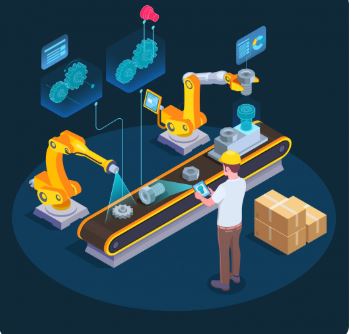
The world tends to notice breakthroughs only after they hit store shelves or transform supply chains, but the real story often begins in unremarkable factory spaces. Walk through an industrial park today and you’ll find workshops buzzing with new methods that look nothing like the manufacturing floors of twenty years ago. From robotics to reimagined design techniques, the sector is undergoing a subtle but sweeping reinvention. It’s less about brute force production and more about intelligence, precision, and adaptability. The result is an industry that looks more nimble, more sustainable, and surprisingly creative.
Design at the Speed of Thought
One of the most dramatic changes in manufacturing has been the shift from slow, linear design cycles to fast, iterative experimentation. Traditional models required months of drafting, tooling, and refining before a product was even close to reality. Today, advances in injection molding prototyping are collapsing those timelines. Engineers can run through several versions of a part in the time it once took to finalize a single drawing. The benefit isn’t just speed, though speed matters when competition is fierce. It’s the freedom to test bold ideas, push boundaries, and fail quickly without incurring massive costs. That kind of creative elasticity is giving manufacturers a new edge, particularly in industries where product lifespans are short and expectations evolve overnight.
Designers no longer feel chained to conservative choices, knowing they can make adjustments almost in real time. A miscalculation that once meant a setback of weeks might now be resolved in a day. This fluidity fosters collaboration across departments, where engineers, designers, and marketers can engage in problem-solving together instead of in succession. When feedback loops shorten, good ideas don’t get stuck in limbo, and even niche concepts can make it into production if they prove viable early.
The Machines That Never Sleep
Automation isn’t new, but the way machines are now integrated into production lines feels different. The image of hulking robots cordoned off in cages is fading. Instead, we see collaborative robots—lightweight, sensor-driven, and programmed to work alongside humans safely. They don’t replace skilled labor so much as extend it, taking on repetitive or precision-demanding tasks that wear down human patience. Workers often describe the relief of handing off monotonous duties, allowing them to focus on higher-level oversight and quality control. Far from creating tension, this partnership tends to build confidence. When people aren’t stretched thin, error rates drop, and the culture in a workplace can shift from strained to genuinely engaged.
Factories that embrace this balance often run continuously, with machines keeping pace through the night and humans stepping in at crucial checkpoints. The efficiency gains are undeniable, but the more interesting story is how these setups expand possibility. Smaller firms that once struggled to keep costs manageable are suddenly able to match output levels previously reserved for large-scale manufacturers. That democratization of capability is changing who gets to compete on the global stage.
Materials With Minds of Their Own
The substances we use to make things are no longer static. Smart materials—metals that change properties under stress, polymers that self-heal, textiles that react to light or temperature—are becoming part of the design vocabulary. This isn’t just about novelty, although a jacket that adapts to weather still sounds futuristic. It’s about durability, efficiency, and sustainability. When a car panel repairs a scratch without intervention or a construction material adapts to shifting loads, the costs of upkeep plummet. At scale, those benefits ripple outward into supply chains, resource management, and consumer trust.
Researchers have moved these materials from the laboratory bench to the assembly line, often working hand-in-hand with manufacturers eager to differentiate themselves. For companies, the challenge is learning to design for these materials, not just swap them into existing products. It requires a rethink of entire processes, from heat treatments to stress testing. The payoff is huge: fewer recalls, lighter products that consume less fuel, and goods that last longer without waste.
Heritage Meets Innovation
It would be easy to imagine this reinvention as a purely digital or high-tech story, but in reality it blends old foundations with new layers of ingenuity. In places where textile machinery once roared, you now find hybrid spaces where age-old weaving knowledge meets computer-controlled looms capable of intricate, high-speed patterning. These aren’t dusty relics kept alive for nostalgia. They’re thriving hubs where traditional craftsmanship informs next-generation design. A weaver’s intuition about tension or thread strength can complement an engineer’s coding of automated looms, resulting in textiles with both soul and sophistication.
This fusion underscores a broader truth about manufacturing: progress rarely erases what came before. It absorbs, adapts, and reshapes it. Companies that respect the deep knowledge embedded in their industries often find more success than those that chase novelty alone. Legacy skills paired with fresh technology create products that feel both timeless and modern, appealing to markets that want authenticity without sacrificing innovation.
Sustainability as a Competitive Force
Sustainability used to be a side conversation in manufacturing, something folded into annual reports rather than daily practice. That’s no longer the case. Environmental performance has become a core metric of competitiveness, influencing contracts, partnerships, and customer loyalty. Manufacturers are rethinking everything from energy sources to waste streams. Circular models, where offcuts are reintegrated into production or products designed for disassembly and reuse, are gaining real traction.
The shift isn’t purely altruistic. Energy efficiency saves money, waste reduction improves margins, and reputational gains often translate directly into sales. Governments are tightening standards, but in many cases, companies are moving ahead of regulations, driven by pressure from consumers and investors who equate sustainability with long-term viability. Factories that were once smoke-belching icons of industrialization are evolving into clean, data-driven environments where resource stewardship is seen as strategic foresight.
The Workforce Redefined
Every transformation brings questions about people, and manufacturing is no exception. The concern that machines will edge out workers has shadowed the sector for decades, yet the reality is proving more nuanced. Jobs are changing rather than vanishing. Technical skills in robotics maintenance, programming, and data analysis are in high demand, while creative problem-solving remains irreplaceable. Training programs that once focused narrowly on mechanical skills are broadening to include coding, systems thinking, and even design literacy.
Younger workers often find these hybrid roles attractive because they combine physical problem-solving with intellectual challenge. Veterans of the industry, meanwhile, bring invaluable practical insight, and many are adapting by upskilling in areas like machine learning interfaces. The most successful firms are those that treat education as ongoing, not a box to check at the start of a career. That mindset keeps people adaptable, and it keeps companies resilient when technologies shift.
Closing Reflection
Manufacturing is often described as the backbone of economies, but right now it looks more like the brain—processing, adapting, and inventing at a pace that defies its reputation for rigidity. What’s happening inside factories isn’t flashy, yet it’s shaping the products, jobs, and industries of tomorrow. The story of reinvention is unfolding in real time, and it’s being written not just by algorithms and machines, but by people reimagining what it means to make things well.