
Modern smart factories rely on highly integrated automation systems to maintain continuous production, consistent quality, and competitive efficiency. As manufacturing environments become more connected and data-driven, the tolerance for unexpected downtime or equipment instability continues to shrink. In this context, equipment reliability is no longer a maintenance concern alone—it has become a strategic pillar of smart manufacturing.
However, many automated production lines operate under harsh industrial conditions, including high temperatures, corrosive atmospheres, dust exposure, and round-the-clock operation. These factors place significant stress on automation hardware, from sensors and actuators to control cabinets and instrumentation interfaces. Understanding how to design reliability strategies for such environments is essential for sustaining long-term performance in smart factories.
Harsh Operating Conditions in Smart Factory Environments
Unlike controlled laboratory settings, real-world manufacturing plants expose automation systems to a wide range of environmental challenges. High-temperature zones near furnaces, kilns, or heat-treatment lines can degrade insulation materials and accelerate component aging. Chemical processing areas introduce corrosive vapors and aggressive cleaning agents, while heavy industries such as metallurgy or mining generate abrasive dust and vibration.
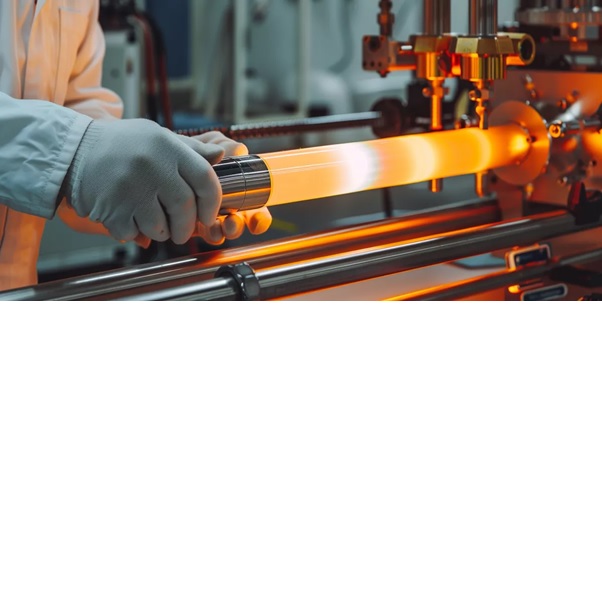
In these conditions, reliability issues often originate at the interfaces—where sensors, cables, and protective housings interact with the surrounding environment. To mitigate these risks, engineers frequently reference materials and structural components designed for thermal stability and electrical insulation, such as alumina-based insulating tube structures, in discussions related to high-temperature automation and harsh-environment protection. These references are typically part of broader engineering considerations rather than product-level decisions.
Why Reliability Is Central to Smart Manufacturing
Smart factories are built on the premise of continuous data flow and autonomous decision-making. Sensors feed real-time information into control systems, analytics platforms predict deviations, and automated responses are triggered with minimal human intervention. When equipment reliability is compromised, this entire feedback loop is disrupted.
Unreliable automation components can lead to:
- Inaccurate sensor readings that distort production data
- Frequent maintenance interventions that interrupt continuous operation
- Reduced overall equipment effectiveness (OEE)
- Increased safety risks in high-energy or high-temperature processes
As a result, reliability must be addressed at the system level, encompassing environmental protection, component selection, integration strategy, and lifecycle planning.
Reliability-Oriented Design Strategies for Automation Systems
Environmental Segmentation and Zoning
One effective strategy is to segment production environments based on exposure levels. Automation components operating near extreme heat or corrosive agents can be isolated using protective housings, thermal barriers, or remote sensing approaches. This reduces direct exposure and extends service life.
Material and Insulation Considerations
Electrical insulation and thermal resistance are critical in harsh conditions. Engineers often evaluate insulation materials not only for their dielectric properties but also for long-term stability under thermal cycling. These considerations influence design choices across sensor assemblies, cable routing, and protective conduits.
Redundancy and Fail-Safe Architectures
In reliability-critical zones, redundancy is commonly built into automation architectures. Duplicate sensors, parallel signal paths, and fail-safe logic ensure that isolated component failures do not cascade into system-wide disruptions.
Integration with Predictive Maintenance Frameworks
Reliability strategies in smart factories increasingly intersect with predictive maintenance systems. By combining environmental monitoring with performance data, manufacturers can anticipate degradation before failure occurs. For example, temperature trends, vibration patterns, or signal drift may indicate insulation breakdown or material fatigue.
When integrated effectively, predictive maintenance enables:
- Condition-based servicing instead of fixed schedules
- Reduced unplanned downtime
- Better spare-parts planning
- Improved asset lifecycle management
This integration reinforces the importance of designing automation systems with both environmental resilience and data visibility in mind.
Industry Impact: Reliability as a Competitive Advantage
Across industries such as chemicals, energy, metals, and advanced manufacturing, reliable automation systems translate directly into business value. Plants that minimize downtime and stabilize production under harsh conditions achieve higher throughput, lower maintenance costs, and improved safety performance.
More importantly, reliability supports scalability. As manufacturers expand capacity or introduce new digital layers—such as advanced analytics or AI-driven optimization—stable automation infrastructure becomes the foundation upon which innovation is built.
Future Outlook: Building Resilient Automation for Next-Generation Factories
Looking ahead, smart factories will continue to push automation systems into more demanding environments. Higher process temperatures, tighter tolerances, and increased integration density will amplify the consequences of reliability failures. At the same time, advances in materials science, system design, and data-driven maintenance will provide new tools to address these challenges.
The most successful manufacturers will be those that treat equipment reliability as a strategic design objective rather than a reactive maintenance task. By aligning environmental protection, system architecture, and predictive intelligence, smart factories can sustain performance even under the harshest operating conditions.
Conclusion
Equipment reliability in smart factories is inseparable from the realities of harsh industrial environments. As automation systems become more interconnected and central to production outcomes, their ability to withstand thermal, chemical, and mechanical stress defines overall operational success.
Through thoughtful system design, appropriate material considerations, and integration with predictive maintenance frameworks, manufacturers can build automation infrastructures that remain stable, accurate, and resilient over time. In the evolving landscape of smart manufacturing, reliability is not just about preventing failure—it is about enabling continuous, connected, and intelligent production.